
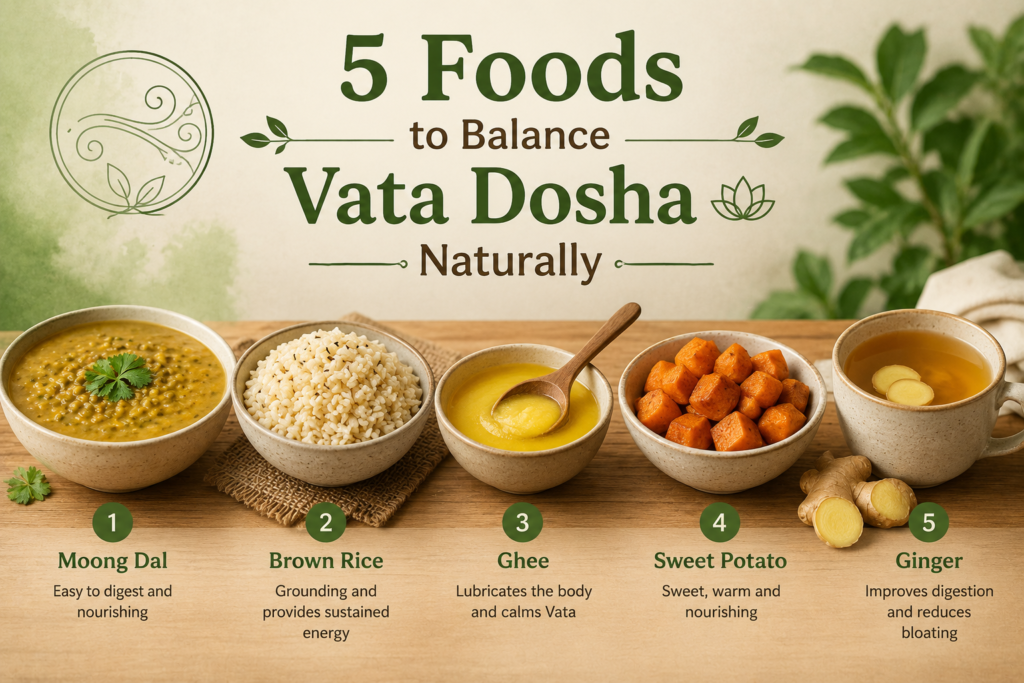
5 Foods to Balance Vata Dosha Naturally
In Ayurveda, the body is governed by three energies known as doshas — Vata, Pitta, and Kapha. Among them, Vata dosha is connected with the elements of air and space. It controls movement in the body, including breathing, blood circulation, nerve impulses, thoughts, and digestion. When Vata is balanced, a person usually feels energetic, creative, active, and mentally alert. However, when Vata becomes excessive, it can create instability in both the body and mind.
Common signs of aggravated Vata include dryness, constipation, anxiety, overthinking, poor sleep, cold hands and feet, joint stiffness, irregular digestion, low energy, and sudden mood changes. Ayurveda explains that Vata increases due to excessive travel, irregular eating habits, cold foods, stress, lack of sleep, and too much mental activity.
To calm Vata, Ayurveda recommends foods that are warm, nourishing, moist, grounding, and easy to digest. Foods with sweet, mildly salty, and slightly sour tastes are generally considered beneficial for balancing this dosha.
Below are five powerful foods that help calm and balance Vata naturally. Each food is explained in detail with its Ayurvedic importance, benefits, and simple ways to include it in everyday life.
1. Warm Cooked Rice – A Grounding and Comforting Food
Rice is one of the most soothing foods for people with high Vata. Ayurveda values warm, soft, and easy-to-digest meals because they help calm dryness and irregular digestion. Freshly cooked rice provides stability and comfort to the digestive system.
Vata people often experience bloating, gas, or fluctuating appetite. Warm rice helps settle the stomach gently without creating heaviness. It is especially useful during cold weather or periods of stress when Vata naturally increases.
Benefits of Rice for Vata:
- Easy Digestion.
- Warm rice is light enough for digestion while still giving nourishment and energy. It helps reduce digestive discomfort caused by dry or raw foods.
- Provides Grounding Energy.
- Vata is naturally light and mobile. Rice gives a feeling of steadiness and calmness, helping the body feel more balanced.
- Helps Dryness.
- Cooked rice contains moisture, which helps counter the dry quality of aggravated Vata.
- Supports Better Sleep.
- Warm meals made with rice may help relax the body and promote restful sleep.
Best Ways to Eat Rice:
- Warm rice with ghee.
- Soft khichdi made with rice and moong dal.
- Rice with mild vegetable curry.
- .Rice porridge during weak digestion.
- Steamed rice with warm soups.
Important Tip:
Cold leftover rice directly from the refrigerator may aggravate Vata. Freshly cooked warm rice is considered more beneficial.
2. Ghee – Nourishment for Body and Mind
Ghee is one of Ayurveda’s most respected foods for calming Vata because it deeply nourishes and lubricates the body. Vata has dry and rough qualities, while ghee provides softness and moisture.
People with aggravated Vata often feel mentally exhausted, physically weak, or emotionally restless. Ghee helps create stability and nourishment from within.
Benefits of Ghee for Vata:
- Reduces Dryness.
- Dry skin, dry lips, and constipation are common signs of excess Vata. Ghee helps bring moisture to body tissues.
- Supports Digestion.
- A small amount of ghee may improve digestion and help food move smoothly through the intestines.
- Nourishes the Nervous System.
- Ayurveda considers ghee beneficial for calming the mind and supporting healthy nerve function.
- Helps Joint Comfort.
- Vata imbalance can create stiffness and cracking joints. Ghee’s lubricating quality may support joint health.
- Promotes Mental Calmness.
- Warm foods with ghee often create emotional comfort and relaxation.
Simple Ways to Use Ghee:
- Add a spoon of ghee to warm rice.
- Use in soft rotis.
- Add to soups or dal.
- Mix into khichdi.
- Use moderately in homemade cooking.
- Balance is Important.
Although ghee is nourishing, it should still be consumed in moderation according to digestion and activity level.
3. Sweet Potatoes – Warm and Comforting Nourishment
Sweet potatoes are highly beneficial for calming Vata because they are naturally sweet, grounding, and nourishing. Ayurveda considers sweet taste especially helpful for reducing excessive dryness and instability.
Unlike dry snacks or processed foods that may aggravate Vata, sweet potatoes provide warmth and sustained energy.
Benefits of Sweet Potatoes for Vata:
- Provides Warmth.
- Warm cooked sweet potatoes help reduce the cold quality associated with Vata imbalance.
- Gives Stable Energy.
- Vata people sometimes experience sudden energy drops. Sweet potatoes provide slow and steady nourishment.
- Supports Digestion.
- When cooked properly, sweet potatoes are easier to digest than many raw or dry foods.
- Comforting During Stress.
- Their soft texture and natural sweetness create a comforting effect for both body and mind.
- Helps Reduce Cravings.
- Balanced nourishing meals can reduce irregular eating habits common in Vata imbalance.
Best Ways to Eat Sweet Potatoes:
- Baked sweet potatoes with ghee.
- Sweet potato soup.
- Mashed sweet potatoes.
- Roasted sweet potatoes with mild spices.
- Sweet potato added to khichdi.
- Avoid Excess Dryness.
Deep-fried sweet potato chips may not provide the same calming benefits because excessive dryness can aggravate Vata.
4. Warm Milk with Gentle Spices – Traditional Vata Support
Warm milk has been used in Ayurveda for centuries as a nourishing drink for calming Vata. It is especially valued when combined with gentle spices such as cardamom, cinnamon, or a small amount of turmeric.
Vata imbalance often affects sleep and mental peace. Warm milk provides comfort and relaxation, especially during evening hours.
Benefits of Warm Milk for Vata
- Encourages Better Sleep.
- Warm milk before bedtime may help relax the nervous system and improve sleep quality.
- Nourishes Body Tissues.
- Milk provides nourishment and strength when digested properly.
- Calms Anxiety and Restlessness.
- The warmth and softness of milk help counter the unstable nature of aggravated Vata.
- Supports Energy.
- People with high Vata sometimes feel weak or depleted. Warm milk can provide gentle energy and comfort.
- Moisturizes Internally.
- Warm milk helps reduce internal dryness.
Best Ways to Drink Milk
- Warm milk with cardamom.
- Turmeric milk at night.
- Milk with a little ghee.
- Lightly spiced milk during cold weather.
Important Note:
Milk should be consumed warm rather than cold for Vata balance. Some people may also prefer plant-based alternatives if dairy does not suit their digestion.
⸻
5. Soaked Almonds – Strength and Stability
Almonds are considered highly nourishing in Ayurveda, especially when soaked overnight and peeled before eating. They help support strength, energy, and mental clarity while calming Vata’s dry and light qualities.
Vata people often burn mental energy quickly and may feel exhausted after stress or overwork. Almonds provide grounding nourishment that supports both brain and body.
Benefits of Almonds for Vata:
- Healthy Nourishment.
- Almonds contain natural oils and nutrients that help reduce dryness.
- Supports Brain Function.
- Ayurveda traditionally values almonds for memory and concentration.
- Provides Strength.
- They help build stability and sustained energy.
- Helps Skin and Hair.
- The natural oils in almonds support healthy skin and hair, which may become dry during Vata imbalance.
- Reduces Hunger Swings.
- Soaked almonds provide satisfying nourishment and may reduce irregular appetite.
How to Eat Almonds:
- Soak overnight and peel in the morning.
- Blend into warm almond milk.
- Add to porridge.
- Use in homemade desserts.
- Eat a small handful as snacks.
Why Soaking Matters:
Ayurveda recommends soaking almonds because it makes them softer and easier to digest.
Additional Lifestyle Tips for Balancing Vata
- Food alone is not enough. Ayurveda always combines proper diet with balanced daily habits.
- Eat Meals on Time.
- Irregular eating increases Vata. Consistent meal timing supports digestion and stability.
- Prefer Warm Foods.
- Cold foods and drinks may aggravate dryness and digestive irregularity.
- Sleep Properly.
- Lack of sleep can increase anxiety and restlessness.
- Stay Warm.
- Cold weather often worsens Vata symptoms. Warm clothing and warm meals help maintain balance.
- Avoid Excessive Stress.
- Overthinking and mental overload can increase Vata quickly.
- Gentle Exercise Helps.
Light yoga, stretching, and walking are often better than excessive intense workouts for Vata balance.
Foods That May Increase Vata
Some foods and habits can aggravate Vata when consumed excessively:
- Cold drinks
- Dry snacks
- Excess raw salads
- Popcorn and chips
- Too much caffeine
- Skipping meals
- Frozen foods
- Excess fasting
These foods may increase dryness, bloating, anxiety, and instability.
⸻
Common Signs of High Vata
Understanding the signs helps identify imbalance early.
Physical Signs:
- Dry skin
- Constipation
- Cracking joints
- Cold hands and feet
- Gas and bloating
- Irregular appetite
Mental and Emotional Signs
- Anxiety
- Restlessness
- Difficulty sleeping
- Fearfulness
- Overthinking
- Difficulty focusing
Ayurveda focuses on restoring warmth, nourishment, and calmness to reduce these symptoms naturally.
⸻
Simple One-Day Vata Balancing Meal Plan
Morning:
- Warm water
- Soaked almonds
Breakfast:
- Warm porridge with ghee
Lunch:
- Rice
- Moong dal
- Cooked vegetables
- Small spoon of ghee
Evening:
- Warm herbal tea
Dinner:
- Soft khichdi or soup
- Warm milk before bed
This type of meal pattern provides warmth, moisture, and stability throughout the day.
⸻
Emotional Balance and Vata
Ayurveda believes Vata strongly influences the nervous system. When Vata is balanced, the mind feels creative and joyful. But when aggravated, emotional instability may appear.
Warm nourishing foods help not only the body but also emotional wellbeing. Eating slowly, sitting peacefully during meals, and avoiding distractions while eating are also considered important.
⸻
Seasonal Care for Vata
Vata tends to increase during cold, windy, and dry seasons. During these times:
- Eat more warm soups.
- Use healthy oils moderately.
- Drink warm beverages.
- Avoid excessive travel.
- Maintain a regular routine.
Consistency is extremely important for Vata balance.
⸻