
5 Foods to Balance Kapha Naturally
In Ayurveda, the human body is guided by three main energies known as doshas — Vata, Pitta, and Kapha. Among these, Kapha dosha is formed from the elements of earth and water. It provides stability, strength, lubrication, patience, and endurance. A balanced Kapha person is usually calm, caring, loyal, energetic, and emotionally steady.
However, when Kapha becomes excessive, the body may start feeling heavy, slow, and sluggish. Common signs of high Kapha include weight gain, low energy, laziness, water retention, excessive sleep, congestion, slow digestion, emotional attachment, and lack of motivation. People with aggravated Kapha may also feel mentally dull or emotionally stuck.
Ayurveda explains that Kapha increases due to overeating, too much sweet or oily food, lack of movement, cold foods, excessive dairy, and sleeping during the daytime. To restore balance, Ayurveda recommends foods that are light, warm, dry, mildly spicy, and stimulating.
Below are five highly beneficial foods that help reduce excess Kapha naturally. These foods support digestion, improve energy, and help remove heaviness from the body while maintaining nourishment and balance.
⸻
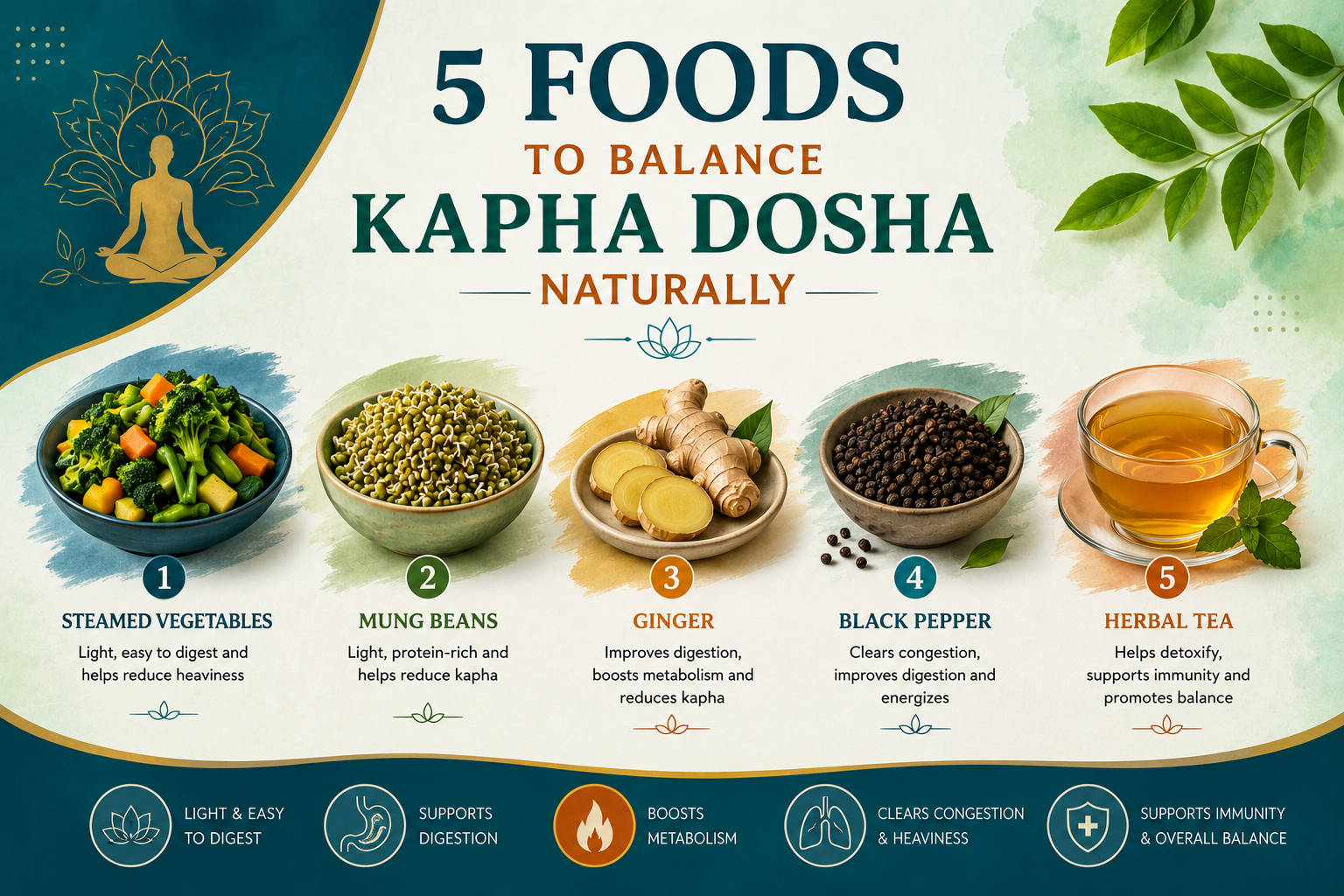
1. Ginger
The Digestive Fire Activator Ginger is one of the most powerful foods for balancing Kapha because it stimulates digestion and helps reduce sluggishness. Ayurveda often calls ginger a natural digestive supporter because it helps awaken the digestive fire, also known as Agni.
Kapha imbalance commonly causes slow digestion, heaviness after meals, and mucus accumulation. Ginger’s warming nature helps clear these issues gently and naturally.
Benefits of Ginger for Kapha:
- Improves Digestion.
- Kapha people often feel heavy after eating. Ginger helps the digestive system work more efficiently.
- Reduces Mucus.
- Excess Kapha may lead to congestion, cough, or excessive mucus production. Ginger’s warming effect helps reduce buildup.
- Increases Energy.
- Kapha imbalance sometimes creates tiredness and lack of motivation. Ginger helps bring freshness and alertness.
- Supports Weight Management.
- By stimulating metabolism and digestion, ginger may support healthy weight balance.
- Helps Circulation.
- Warm spices like ginger help improve blood circulation and reduce feelings of coldness or sluggishness.
Best Ways to Use Ginger:
- Fresh ginger tea
- Ginger added to warm soups
- Ginger in vegetable stir-fries
- Small ginger slices with warm water
- Mild ginger chutney
Important Tip:
Too much ginger may feel overly heating for some people, so moderate use is usually best.
⸻
2. Green Leafy Vegetables
Light and Cleansing Nutrition
Green leafy vegetables are excellent for Kapha because they are light, cleansing, and rich in nutrients. Kapha dosha naturally carries heaviness and moisture, so foods that feel fresh and light help create balance.
Vegetables like spinach, fenugreek leaves, mustard greens, coriander leaves, and kale are considered supportive for reducing excess Kapha.
Benefits of Green Vegetables for Kapha:
- Helps Remove Heaviness.
- Leafy vegetables are naturally lighter than oily or processed foods.
- Supports Digestion.
- The fiber in vegetables supports healthy bowel movement and digestion.
- Reduces Water Retention.
- Kapha imbalance often causes puffiness or fluid retention. Light vegetables help reduce this tendency.
- Improves Energy.
- Fresh vegetables nourish the body without causing excessive heaviness.
- Supports Natural Detoxification.
- Bitter and slightly pungent vegetables help cleanse the system gently.
Best Ways to Eat Green Vegetables:
- Warm sautéed vegetables
- Light vegetable soups
- Stir-fried greens with mild spices
- Mixed vegetable curry
- Green smoothies in moderation
- Avoid Heavy Preparation
Deep frying vegetables or adding too much cream and butter may increase Kapha again.
⸻
3. Lentils and Moong Dal
Light Protein for Strength.
Lentils, especially moong dal, are highly recommended in Ayurveda for balancing Kapha because they provide nourishment without excessive heaviness.
Kapha people often need foods that are satisfying yet easy to digest. Moong dal is considered one of the gentlest and lightest lentils.
Benefits of Lentils for Kapha:
- Light Yet Nourishing.
- Lentils provide protein and energy without creating the sluggish feeling caused by very oily foods.
- Supports Digestion.
- Properly cooked lentils with warming spices may improve digestive strength.
- Helps Maintain Healthy Weight.
- Balanced protein intake can help reduce overeating and unhealthy cravings.
- Keeps Energy Stable.
- Lentils provide steady nourishment throughout the day.
- Easy to Combine.
- They work well with vegetables and mild spices for balanced meals.
Best Ways to Eat Lentils:
- Moong dal soup
- Light khichdi with vegetables
- Lentil stew
- Warm dal with spices like cumin and ginger
- Sprouted moong in moderation
- Helpful Spices
Kapha-balancing spices like cumin, black pepper, turmeric, and ginger can make lentils even more supportive.
⸻
4. Apples
A Light and Refreshing Fruit
Among fruits, apples are considered particularly useful for Kapha because they are lighter compared to very heavy or overly sweet fruits.
Kapha imbalance often increases attachment to rich desserts and sugary foods. Apples provide natural sweetness while remaining relatively light and refreshing.
Benefits of Apples for Kapha:
- Light and Easy.
- Apples are less heavy than creamy desserts or fried snacks.
- Supports Digestion.
- Their fiber content supports digestion and regular bowel movements.
- Reduces Excess Cravings.
- Natural sweetness may help reduce desire for unhealthy sugary foods.
- Helps Freshness.
- Apples create a refreshing feeling rather than heaviness.
- Useful for Energy.
- They provide gentle energy without causing sluggishness.
Best Ways to Eat Apples:
- Fresh apples during daytime
- Warm baked apples with cinnamon
- Apple slices as snacks
- Apple added to light breakfast bowls
- Avoid Excess Sugar
Apple desserts loaded with sugar or cream may lose their Kapha-balancing benefits.
⸻
5. Barley
A Traditional Kapha-Balancing Grain
Barley has been valued in Ayurveda for centuries as one of the best grains for reducing excess Kapha. It is lighter and drier compared to heavier grains and helps reduce sluggishness.
Kapha people often benefit from grains that do not create excessive moisture or heaviness in the body.
Benefits of Barley for Kapha:
- Supports Weight Balance.
- Barley helps create fullness while remaining relatively light.
- Reduces Water Retention.
- It is traditionally considered helpful for reducing excess fluid accumulation.
- Improves Digestion.
- Barley supports healthy digestive activity when cooked properly.
- Gives Stable Energy.
- It provides nourishment without excessive heaviness.
- Helpful for Active Lifestyle.
- Barley works well for people trying to maintain fitness and energy.
Best Ways to Eat Barley:
- Barley soup
- Barley porridge
- Barley water
- Mixed grain meals
- Barley added to vegetable dishes
- Keep It Warm
Warm barley dishes are generally better for Kapha than cold preparations.
⸻
Additional Lifestyle Tips to Balance Kapha:
- Ayurveda believes food works best when combined with proper lifestyle habits.
- Stay Physically Active.
- Kapha increases with inactivity. Regular movement helps maintain balance.
- Avoid Overeating.
- Heavy meals may worsen sluggishness and weight gain.
- Wake Up Early.
- Sleeping excessively can increase Kapha qualities.
- Prefer Warm Food.
- Warm meals support digestion better than cold or refrigerated foods.
- Avoid Emotional Eating.
- Kapha imbalance sometimes causes attachment to comfort foods.
- Keep the Mind Active.
- Learning, creativity, and social activity help reduce mental dullness.
⸻
Foods That May Increase Kapha:
Certain foods may aggravate Kapha when consumed excessively:
- Fried foods
- Heavy sweets
- Excess dairy
- Ice cream
- Cold drinks
- Too much oily food
- Processed junk food
- Excess rice and refined flour
These foods may increase mucus, weight gain, and sluggish digestion.
⸻
Common Signs of High Kapha:
Recognizing Kapha imbalance early helps maintain better health.
Physical Signs
- Weight gain
- Excess sleep
- Sluggish digestion
- Water retention
- Mucus buildup
- Low physical energy
Emotional Signs
- Lack of motivation
- Emotional attachment
- Mental dullness
- Difficulty adapting to change
- Feeling emotionally heavy
Ayurveda focuses on bringing lightness, warmth, and movement to reduce these symptoms.
⸻
Simple One-Day Kapha Balancing Meal Plan:
Morning
- Warm ginger water
- Light fruit like apple
Breakfast
- Warm barley porridge
Lunch
- Moong dal
- Cooked vegetables
- Small portion of grains
Evening
- Ginger tea
Dinner
- Vegetable soup with lentils
This kind of meal plan helps maintain energy while reducing heaviness.
⸻
Emotional Health and Kapha:
Kapha is strongly connected with emotional attachment and stability. Balanced Kapha creates love, patience, and loyalty. But excess Kapha may lead to emotional stagnation or resistance to change.
Light foods and active habits help maintain emotional freshness. Spending time outdoors, exercising, and engaging in creative activities may help balance Kapha naturally.
⸻
Seasonal Care for Kapha:
Kapha tends to increase during cold and damp seasons, especially late winter and spring.
During these periods:
- Eat lighter meals
- Use warming spices
- Stay physically active
- Avoid daytime sleeping
- Reduce heavy dairy intake
Consistency is very important for Kapha balance.
⸻
The Importance of Digestive Fire in Kapha:
Ayurveda places great importance on digestive strength. Kapha imbalance often weakens digestion, leading to heaviness and toxin buildup.
Warm foods and spices help strengthen digestion naturally. Eating slowly, avoiding overeating, and staying active after meals may also support healthy metabolism.