
5 Foods for Better Gut Health
1. Plain yoghurt with live cultures
Think of plain yoghurt like a pack of friendly helpers moving into your stomach and gut. When you eat yoghurt that has “live cultures,” you give your body good bacteria that keep the gut peaceful and working well. These good bacteria help break down food, stop bad bacteria from growing too much, and reduce bloating and gas.
But flavoured & sweet yoghurts are full of sugar content and they feed the unhealthy kind of bacteria, which might cause more gas and discomfort. Therefore it is better to choose unsweetened, plain yoghurt and add a little fruit or nuts only if you want flavour. Even a small cup of yoghurt once a day can slowly make your stomach feel lighter and more regular.
—
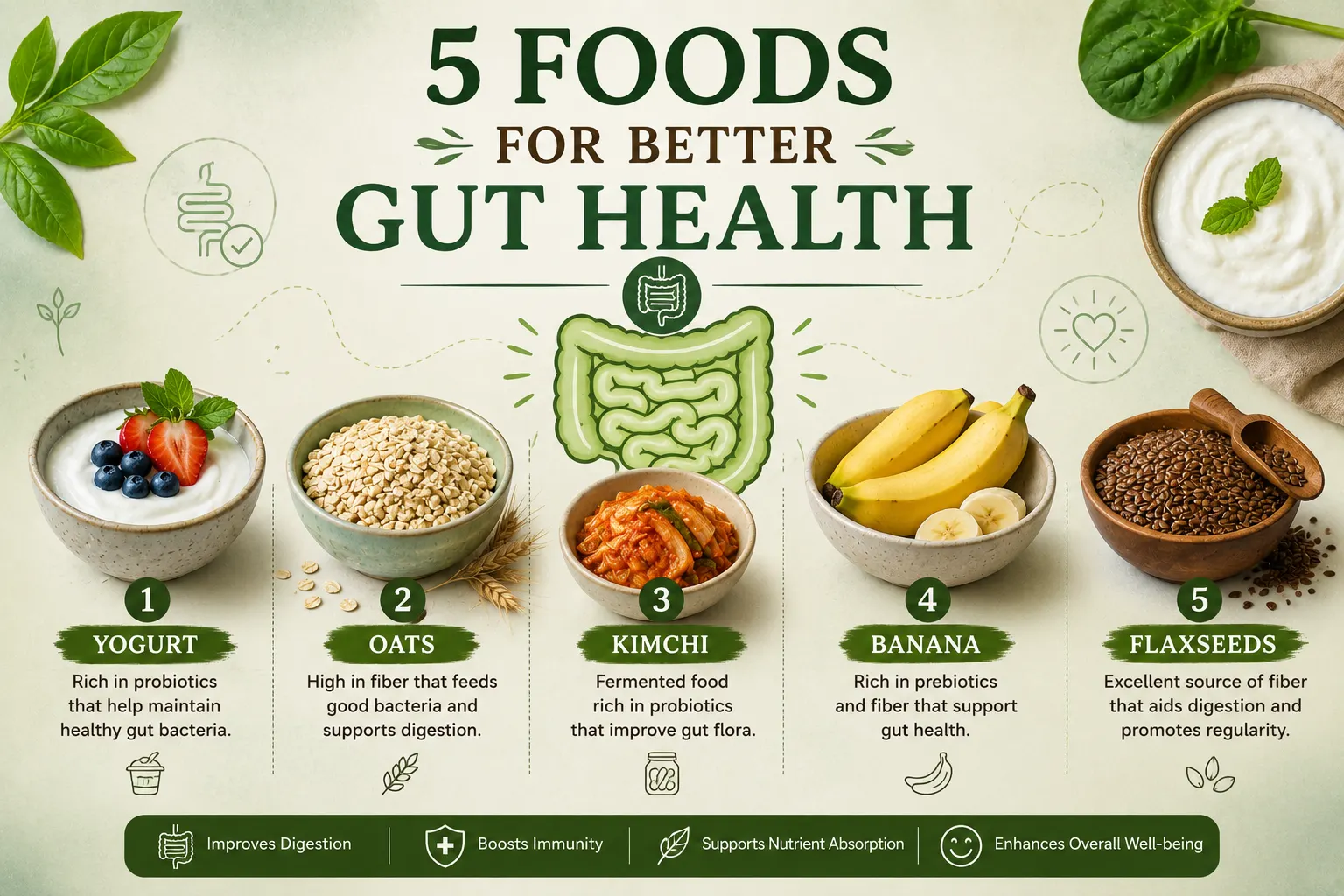
2. Oats and whole grains
Oats and whole grains (like brown rice, barley, and whole‑wheat bread or roti) are full of fibre. Fibrous diet helps stool move smoothly through your intestines instead of getting stuck. It also acts like food for the good bacteria in your gut, which then keep the gut wall healthy and reduce inflammation.
When you eat refined foods (like white bread, maida, or sugary snacks), your gut often feels heavy and slow. But when you swap some of those with oats, dalia, or brown rice, your digestion becomes gentler and more regular. A simple breakfast of oats cooked with water or milk and a few fruits is easy on the stomach and keeps you feeling full for longer.
—
3. Garlic, onion, and leafy greens
Onions and garlic are tastier and they are like fuel for the good bacteria in your gut. They contain a type of fibre that your body cannot digest, but your good gut bacteria love it. This helps the good bacteria grow and protects the inner lining of your intestines.
Leafy greens like spinach, methi, and palak also add fibre and important minerals like magnesium, which help your intestines move smoothly. When you cook sabzi, dal, or curries using onions and garlic as a base, and add some spinach or other greens, you are quietly feeding your gut health every day.
If raw onion or garlic makes you feel gassy, try cooking them well and using smaller amounts. This keeps the gut‑friendly benefits while reducing discomfort.
—
4. Berries (blueberries, strawberries, raspberries)
Berries are small, juicy fruits that are rich in fibre and natural antioxidants. These antioxidants help reduce small, hidden inflammation in the gut and protect the inner walls from damage. They also give extra food to the good bacteria, helping them grow stronger and more diverse.
Berries are usually easier on the stomach than very sugary fruits because they are not too sweet and still high in fibre. You can eat a small bowl of berries as a snack, add them to yoghurt, or use them as a topping on oats. This gives your gut a gentle, healthy push without heaviness or discomfort.
—
5. Bananas (especially a bit firm)
Bananas are soft, easy to digest, and good for the stomach when it is upset. They are rich in potassium, which helps your body hold water and minerals properly, and they gently balance the movement of stool.
Slightly firm (not fully ripe) bananas contain a special kind of fibre called inulin, which feeds the good bacteria in your gut. This helps improve digestion and keeps bowel movements smoother over time.
If you feel constipated, eating a banana with plenty of water and other fibre‑rich foods can gently help things move without harsh medicines. If you have diarrhoea, very ripe banana can still be safe because it is easy to digest and helps calm the stomach.
—
Simple way to use these five foods every day
• Eat plain yoghurt once a day, maybe at breakfast or as an evening snack.
• Choose oats or other whole grains instead of only white bread or maida‑based foods.
• Use onion and garlic while cooking sabzi, dal, or curries; add leafy greens whenever you can.
• Eat berries or a banana once or twice a day as a snack or with meals.
• Always drink enough water with these fibre‑rich foods so your gut does not feel tight or heavy.
When you make these small habits normal, your stomach usually feels lighter, your digestion becomes more regular, and you notice less bloating and gas over time. You do not need to follow a strict diet; just slowly add these five foods into your normal meals.