
In Ayurveda, Pitta dosha is connected with the elements of fire and water. It controls digestion, body temperature, metabolism, intelligence, and energy. People with high Pitta usually have a sharp mind, strong digestion, leadership qualities, and confidence. But when Pitta becomes excessive, it may create problems such as acidity, anger, skin rashes, excessive sweating, burning sensation, hair fall, mouth ulcers, irritation, loose motions, or feeling overheated.
Ayurveda suggests balancing Pitta through a calm lifestyle, cooling habits, and the right food choices. Foods that are naturally cooling, sweet, hydrating, and mildly bitter are considered helpful for calming excess heat in the body.
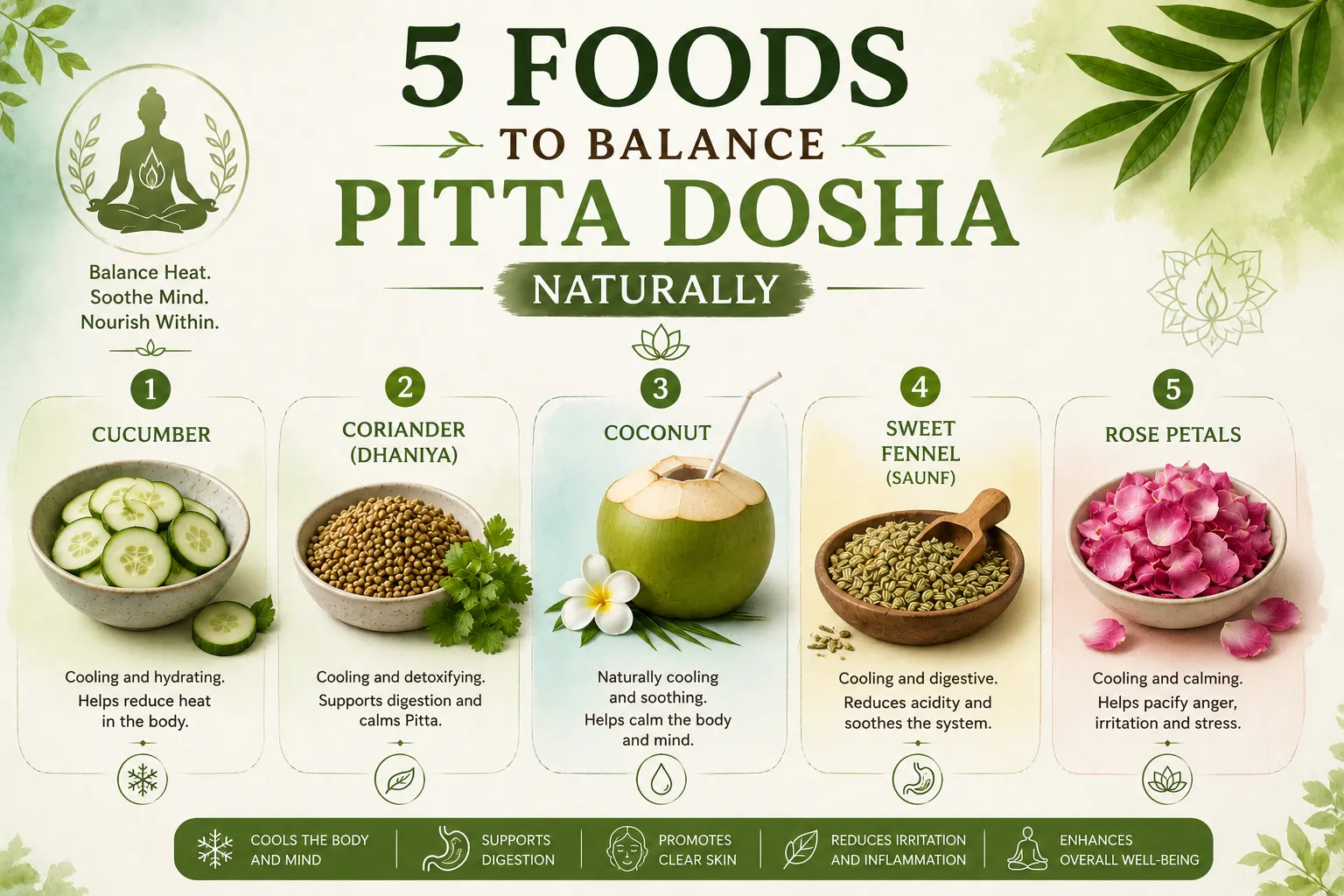
Below are five powerful foods that help balance Pitta naturally. These are explained in a simple and detailed way so you can understand how they work and how to use them in daily life.
⸻
1. Cucumber – The Natural Body Cooler
Cucumber is one of the best foods for calming excess Pitta because it contains a high amount of water and has a naturally cooling effect on the body. During hot weather or when the body feels overheated, cucumber helps reduce internal heat gently.
Ayurveda considers cucumber a soothing food because it supports hydration without putting pressure on digestion. People with high Pitta often feel thirsty, irritated, or experience acidity. Cucumber helps calm these conditions naturally.
Benefits of Cucumber for Pitta:
- Reduces Body Heat.
- Cucumber cools the stomach and body tissues. It is especially useful during summer when Pitta naturally increases because of external heat.
- Helps Acidity and Burning.
- People with excess Pitta often complain of acid reflux, burning in the chest, or stomach irritation. Cucumber’s cooling nature may help provide relief.
- Keeps Skin Calm.
- Pitta imbalance can lead to pimples, redness, rashes, or sensitive skin. Since cucumber hydrates the body deeply, it supports healthy and calm skin.
- Supports Digestion.
- Although cooling, cucumber is still light enough to digest when eaten properly. It refreshes the digestive system without creating extra heat.
Best Ways to Eat Cucumber:
- Fresh cucumber salad with mint
- Cucumber juice without too much spice
- Cucumber mixed with curd
- Cucumber water during summer
- Thin cucumber slices as an evening snack
Things to Avoid:
- Avoid adding too much chili, black pepper, or sour sauces to cucumber because spicy and sour ingredients may increase Pitta again.
⸻
2. Coconut – Cooling Energy from Nature
Coconut is another highly respected cooling food in Ayurveda. Whether it is coconut water, fresh coconut, or coconut milk, this food is excellent for calming fiery Pitta energy.
Coconut nourishes the body while reducing excess heat. Unlike fried or spicy foods that overstimulate Pitta, coconut creates softness and calmness inside the body.
Benefits of Coconut for Pitta:
- Excellent Hydration.
- Tender coconut water contains natural electrolytes and helps maintain fluid balance. It refreshes the body during heat and fatigue.
- Supports Calm Emotions.
- Pitta imbalance sometimes causes anger, impatience, frustration, or irritability. Coconut has a soothing quality that may help calm emotional heat.
- Good for Skin and Hair.
- Pitta excess is often linked with premature greying, hair thinning, scalp heat, and skin inflammation. Coconut nourishes tissues and supports healthy skin and hair.
- Gentle on Digestion.
- Fresh coconut can provide energy without creating sharp digestive heat. Coconut milk in moderate amounts can also be soothing.
Best Ways to Consume Coconut:
- Fresh coconut water in the morning
- Small pieces of fresh coconut as snacks
- Coconut chutney with mild spices
- Coconut milk in rice dishes
- Coconut-based smoothies
Important Tip:
- Avoid packaged coconut drinks with too much sugar or artificial flavor because they may not provide the same natural benefits.
⸻
3. Sweet Fruits – Nature’s Cooling Medicine
Sweet and juicy fruits are highly beneficial for balancing Pitta. Fruits such as watermelon, pear, pomegranate, grapes, ripe mangoes, apples, and sweet melons help cool the body naturally.
Ayurveda says sweet taste reduces excess fire in the body. However, this does not mean artificial sweets or processed desserts. Natural sweetness from fruits is considered healthier and lighter.
Why Sweet Fruits Help Pitta:
- Cooling Effect.
- Most sweet fruits contain high water content, which helps reduce dehydration and internal heat.
- Supports Healthy Digestion.
- Pitta people usually have strong digestion, but excessive heat can irritate the stomach lining. Sweet fruits soothe the digestive tract gently.
- Rich in Antioxidants.
- Many colorful fruits help protect skin and body tissues from heat-related stress.
- Helps Emotional Balance.
- Fresh fruits provide lightness and freshness. This may help reduce irritability and mental stress linked with high Pitta.
Best Fruits for Pitta:
- Watermelon
- Very cooling and hydrating during summer.
- Pear
- Soft, sweet, and soothing for digestion.
- Pomegranate
- Balances heat while supporting blood health.
- Grapes
- Hydrating and calming when eaten fresh.
- Sweet Apples
- Good for gentle nourishment.
How to Eat Fruits Properly:
- Eat fruits fresh and ripe
- Consume fruits during daytime
- Avoid mixing too many fruits together
- Do not combine fruits with heavy meals
Fruits to Limit:
- Very sour fruits may aggravate Pitta if consumed excessively. Examples include very sour oranges or unripe mangoes.
⸻
4. Ghee – Ayurvedic Golden Nourishment
Ghee, also known as clarified butter, is one of the most important foods in Ayurveda. It is considered deeply nourishing and especially helpful for calming Pitta when used in moderation.
Many people think all fats increase heat, but Ayurveda views pure ghee differently. Good-quality ghee has a cooling post-digestive effect and helps lubricate body tissues.
Benefits of Ghee for Pitta:
- Calms Internal Heat
- Ghee reduces dryness and excessive heat inside the digestive tract.
- Supports Brain Function
- Ayurveda considers ghee beneficial for memory, focus, and mental calmness.
- Helps Digestion
- Small amounts of ghee can support healthy digestion without irritating the stomach.
- Nourishes Skin
- Pitta imbalance often affects skin health. Ghee provides healthy nourishment to tissues.
- Reduces Inflammation
- Traditionally, ghee is used to calm inflammatory conditions linked with excess heat.
Ways to Use Ghee:
- Add a small spoon to warm rice
- Mix with soft rotis
- Use in mild khichdi
- Add to cooked vegetables
- Use moderately in homemade food
Important Balance:
- Too much ghee may feel heavy for some people. Moderation is important. Ayurveda always focuses on balance rather than excess.
⸻
5. Mint and Coriander – Cooling Herbs for Daily Use
Mint and coriander are simple herbs found in many kitchens, but they are extremely useful for balancing Pitta naturally. These herbs cool the body while supporting digestion and freshness.
Unlike very spicy herbs, mint and coriander create calmness instead of heat.
Benefits of Mint:
- Refreshes the Body
- Mint gives an immediate cooling sensation that helps during hot weather.
- Supports Digestion
- It may help reduce nausea, heaviness, and digestive irritation.
- Helps Fresh Breath
- Pitta imbalance sometimes causes bad breath due to excess stomach heat. Mint may help reduce this issue.
Benefits of Coriander:
- Reduces Heat
- Coriander is traditionally used to cool the digestive system and urinary tract.
- Supports Detoxification
- It may help the body remove excess heat and toxins naturally.
- Good for Skin
- Coriander’s cooling nature may support healthy skin balance.
Best Ways to Use These Herbs:
- Mint-coriander chutney
- Fresh coriander on cooked food
- Mint tea during hot weather
- Coriander water
- Mint mixed in buttermilk
Avoid Excess Spice:
- When preparing mint or coriander dishes, keep spices mild. Too much chili or garlic may reduce their cooling benefits.
⸻
Additional Tips to Balance Pitta Naturally
- Food works best when combined with healthy habits. Ayurveda focuses on complete balance in lifestyle.
- Eat at Regular Times
- Skipping meals may increase irritability and digestive heat.
- Avoid Too Much Spice
- Very spicy, oily, fried, and sour foods can aggravate Pitta quickly.
- Drink Enough Water
- Hydration is important for calming internal heat.
- Sleep Properly
- Late nights may increase stress and heat in the body.
- Stay Calm
- Meditation, deep breathing, and peaceful activities help reduce emotional Pitta.
- Avoid Excessive Heat Exposure
- Too much sunlight or hot environments can increase Pitta imbalance.
⸻
Foods That May Increase Pitta
To maintain balance, Ayurveda also advises limiting certain foods:
- Excess red chili
- Deep-fried foods
- Too much garlic
- Excess coffee
- Alcohol
- Very sour pickles
- Processed junk food
- Excess salty snacks
These foods may increase body heat, acidity, and irritation.
⸻
Understanding Pitta Through Daily Signs
Sometimes people do not realize their Pitta is high. Here are common signs:
- Feeling hot easily
- Excess sweating
- Acid reflux
- Anger or impatience
- Skin redness
- Mouth ulcers
- Loose motions
- Hair thinning
- Strong hunger and thirst
If these symptoms appear frequently, cooling foods and balanced habits may help.
⸻
Simple One-Day Pitta Balancing Meal Idea
Morning:
- Coconut water
- Sweet fruits like pear or watermelon
Breakfast:
- Mild vegetable poha with coriander
Lunch:
- Rice
- Moong dal
- Cucumber salad
- Small amount of ghee
Evening:
- Mint tea or fresh fruit
Dinner:
- Soft khichdi with coriander and mild vegetables
This kind of meal plan focuses on cooling, hydration, and easy digestion.
⸻